


FOR SOFT CONTOURING
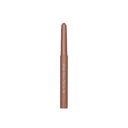


Fullface Slim Stick - Multi-use lip, cheek & eye stick
Regular price
€25,50
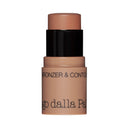

ALL IN ONE - BRONZER & CONTOUR bestseller
Regular price
€26,50
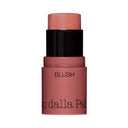
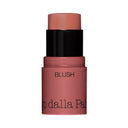

ALL IN ONE - BLUSH bestseller
Regular price
€26,50
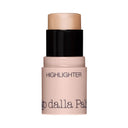
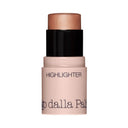

ALL IN ONE - HIGHLIGHTER bestseller
Regular price
€26,50
Soft contouring: why the soft version is preferred in 2026
Ultra-defined contouring has now given way to a more natural approach. Soft contouring sculpts the face without revealing where the product has been applied, using light textures and soft blends. Doing light contouring means blending more carefully and avoiding sharp edges. The result is not a less defined face, but a face that looks naturally so: with its own features enhanced, not redrawn.
The technique remains a play of shadow and light, where dark and light tones work together: the former create depth, while the latter enhance features.
To complete the look, highlighter is a must: the finishing touch that creates highlights, giving freshness and a natural, light finish.
If you like the idea of a nude makeup, read our article on simple natural makeup
The ideal products for face contouring
Contour product (powder or cream)
The choice of product influences both the result and ease of application, so it's worth understanding which one is best for you. Face contouring products are mainly divided into two categories: powder and cream.
Powder contouring is easier to manage, especially if you're a beginner: it blends easily, mistakes are corrected without too much effort, and it's applied precisely with an angled brush. Cream or stick formulas, on the other hand, are more pigmented and blend better with the skin, making them particularly suitable for dry or mature skin. But be careful: they need to be blended immediately, before they dry, preferably with a contouring brush. In short, knowing how to contour with cream products requires a bit more practice, but the result is often more natural and seamless.
FULLFACE SLIM STICK
Fullface Slim Stick - Multi-use lip, cheek & eye stick
Regular price
€25,50

FULLFACE SLIM STICK
Highlighter
Let's say it straight away to remove any doubt: contouring without highlighter is halfway there. They are two sides of the same technique: shadow creates depth, light brings out the features you want to enhance. In soft contouring, highlighter is often the real star: it provides radiance without weighing down the result. It can be in powder, for a satin or glowy finish, or in cream or stick for a more natural and melting effect, perfect even on its own for a luminous and fresh look.

The right brushes
In contouring, one of the details that truly makes a difference is the brush.
To define cheekbones and jawline, an angled brush is used, which allows for precise and controlled application.
For a more diffused and soft face contouring, however, a large domed brush is better, as it distributes the product over a wider surface and blends more naturally.
If you want to delve deeper into choosing the right brushes for each technique, you can find everything in the article on "which makeup brushes are essential and how to use them".
You can find them all in Diego dalla Palma's collection of professional makeup brushes.
Full Face Slim Stick and All in One: all your makeup in one stick
If you want to simplify your routine without compromising on results, we have two products designed specifically for this:
- The Full Face Slim Stick is a multi-purpose stick with a creamy, highly adhesive texture. It's long-lasting, water-resistant for up to 12 hours, and available in 10 versatile shades designed for the face, eyes, and lips.
Its slim format with a thin tip makes it ideal for precise sculpting: darker shades are perfect for contouring and eye shadow, lighter ones for face and eye highlighter, and pinker shades can be used as blush or on the lips.
- The All in One, on the other hand, has a compact format and a highly blendable texture, perfect for those who prefer a warm, natural effect. As the name suggests, this product actually offers three distinct functions: bronzer, highlighter, or blush, to be used as you prefer all over the face.
YOU ARE READING: The most popular face contouring? It's the soft one. Here's how to do it!, YOU ARE READING: The most popular face contouring? It's the soft one. Here's how to do it!
How to contour? In just a few simple steps!
Before we share the perfect face contouring tutorial, a disclaimer: contouring is applied over foundation, but before powder. If you're using cream products, leave your skin powder-free to help them blend with your complexion.


Step 2 - Identify the areas to be shaded
Shade where the sun doesn't naturally hit: the sides of the forehead, the sides of the nose, the area under the cheekbones and the jawline

Step 3 - Apply and blend
Always start with a small amount of product.
With creams, apply small dots and blend immediately.
With powders, work under the cheekbone with light, upward strokes.
In both cases, no harsh lines: blending is the difference between a natural and an artificial result.

Step 4 - Blush
Blush time: apply it to your cheekbones and blend towards your temples to restore warmth and vitality to your face.

Step 5 - Highlighter and finishing
After blush, it's time for highlighter on the high points of the face: cheekbones, nose, and brow bone, to enhance the features and complete the look. Blend outwards, without overlapping it with the shadow. For longer-lasting wear, set everything with a translucent powder.
With the Full Face Slim Stick or the All in One Bronzer Contour you can contour and complete your look with a single product: the creamy texture blends easily, making every step faster and more intuitive.
| FULLFACE SLIM STICK | ALL IN ONE | |
|---|---|---|
| Formato | SLIM – mina sottile ideale per sculpting | CHUBBY - Compatto |
| Tonalità | Studiate per Viso, Occhi e Labbra | Studiate per Viso, Occhi e Labbra |
| Finish | Opaco/satinato | Opaco/satinato e luminoso |
| Texture | Alta adesività e tenuta | Altamente sfumabile |
| Beauty tips | Lavorare per sezione e sfumare velocemente | Sfumare con movimenti circolari |
Contouring for every face shape
Oval face
The oval face is the most balanced shape, so it does not need major corrections.
Simply slightly define the cheekbones and jawline to enhance natural volumes, without overdoing it with shadows.
Round face
The goal for contouring a round face is to visually lengthen the shape.
You shade the sides, from the temple to the jawbone, and bring highlighter to the center of the face on a vertical axis.
The steps for round face contouring are the same as the basic technique, but with greater attention to the side areas.
Long and thin face
For contouring a long face, the goal is the opposite: to shorten.
You shade the high forehead and chin, lighten the temples, and avoid any marked vertical axis that would further prolong the shape. Contouring for a long and thin face aims to create width and balance proportions.
Triangular and heart-shaped face
For a triangular face, with a wide jaw, you shade the jawline and lighten the temples. For a heart-shaped face, with a wide forehead and narrow chin, you work the opposite way: shadow on the temples and highlighter in the center to balance the upper part.

FAQ
Bronzer warms up the complexion and simulates a tan: it has warm, golden, or orangey shades and is applied where the sun naturally hits (forehead, nose, cheekbones, chin). Contour products, on the other hand, have cool or neutral shades and are used to create shadows to sculpt features. The two products are often used together, but with different goals.
Apply after foundation and concealer, but before setting powder. If you use a cream or stick product, it's important not to set your base before applying it, so the texture blends better with your skin.
Yes, especially with cream or stick products. Your fingers or a damp sponge blend the texture well and give a very natural result. Brushes help you to be more precise*, but they are not essential for everyday soft contouring.
The most popular face contouring? It's the soft one. Here's how to do it!
The face contouring never disappeared: it evolved. While the ultra-sculpted technique, with sharp cheekbones and distinct shadows, dominated in the 2010s, today makeup has taken a different direction, more subtle and closer to everyday reality.
In 2026, how to contour is still one of the most searched questions in the beauty world, but the answer has changed: less product, more extensive blending, a more natural result. Soft contouring has taken over, and for good reason.
In this article, you will discover why the soft version works better, how to apply it step-by-step, and how to adapt it to your face shape.